AI Workflow Automation Is Not the Same as Workflow Design
· 5 min read

· 5 min read
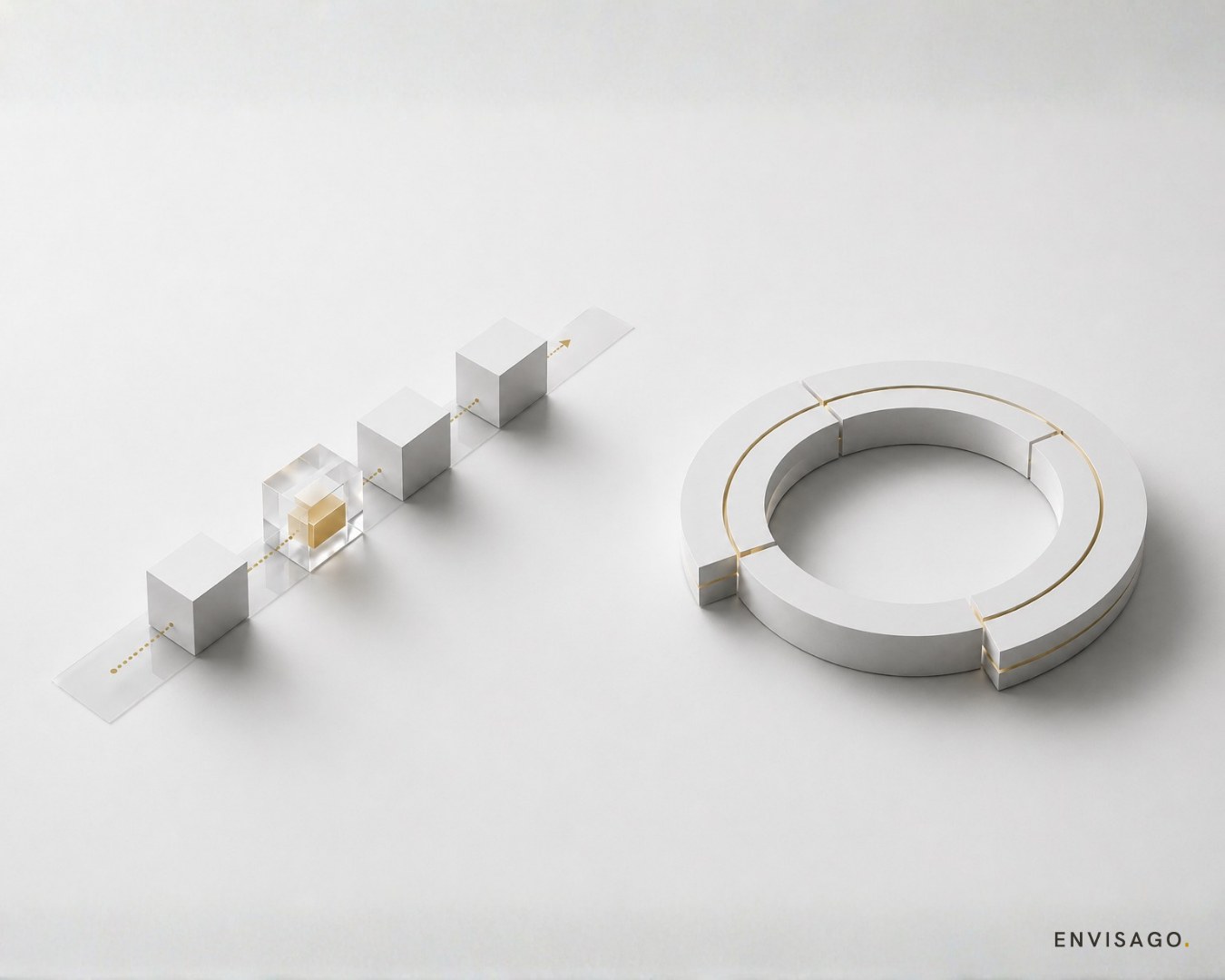
The AI workflow question starts with an assumption: an AI workflow is an existing process with an AI tool dropped into it. The temptation is for teams to evaluate platforms before they have examined the workflow itself and understood what actually needs to change. That is where AI investment can quickly lose potential returns.
We cover what an AI-driven workflow actually is, how it works, why the distinction between automation and design matters more than most teams realise and what that understanding should mean for how you approach any platform evaluation.
An AI workflow is a defined flow of work in which some steps are carried out by AI that reasons from context, alongside the people and systems that handle the rest. It is more than just a sequence of automated steps. Traditional automation follows hardcoded rules, producing the exact same output every time. By contrast, an AI-driven workflow allows the system to reason, infer, and generate outcomes based on context.
The term “workflow” is as critical as the “AI” label. It describes the movement of work, who handles it, when, and how the system reacts to the unexpected. AI modifies those answers, but the structure of the work remains. A poorly designed workflow automated with AI is still a poorly designed workflow, just one that fails faster and at greater scale. Getting clear on the structure of work is the foundation. AI is what you build on top of it.
The mechanics are straightforward once you remove the abstraction. A trigger initiates the workflow, a form submission, an incoming email, or a change in a database record. Inputs arrive and are processed. AI-driven steps may then classify the input, decide the next route, extract data from unstructured content, or flag an exception for human review, with the output of each step feeding the next in a chain that can span multiple systems and teams.
An AI workflow does not eliminate human involvement, it redefines their role. Routine decisions and high-volume processing shift to AI, while complex judgements, ethical decisions, and exception handling remain with people. One of the most important design questions in any AI process automation is this: which decisions should AI make autonomously, which should it recommend for human approval, and which should it not touch at all? Getting that boundary wrong is one of the most common sources of governance failures in AI deployment. The boundary is a design decision, not a default setting.
AI workflow automation asks how to make work happen automatically. AI workflow design asks whether each step is still needed, who or what should handle it and whether the workflow still makes sense with AI. Automating before answering those questions can simply make a poorly designed process run faster.
When automation is treated as design, the existing workflow stays largely intact. Teams make it faster rather than questioning how the work should happen. AI then accelerates the same steps, handoffs and inefficiencies instead of creating a better way of working.
In a traditional workflow, exceptions are handled through escalation rules or manual review queues. In an AI-driven process, exceptions can be caught earlier, classified automatically, and routed differently without human intervention at each step. Decisions that once required a supervisor can be made by AI within defined parameters, with confidence thresholds and fallback conditions built in. This changes how the workflow operates and requires more than simply accelerating the existing process.
Some workflow steps exist because humans needed them as checkpoints or translation points between systems. AI can remove the need for some of these. At the same time, new steps may emerge: prompt design, output validation, model monitoring, and human review where accuracy is critical. Understanding how AI changes the internal logic of a workflow, not just the speed of individual tasks, is the starting point for using it effectively. The resulting process is different, not just faster.
When organisations skip the design step, they automate processes that are built around constraints that AI has already removed. The investment in a tool or platform then produces modest results, not because AI failed, but because the workflow was not designed with AI in mind. The platform performs exactly as it should. The problem is what it was asked to perform.
An AI-driven workflow does not exist in isolation. It connects to people, systems, data sources and performance expectations. When AI changes how a workflow operates, it can change the skills a team needs, how performance is measured and who is accountable for what. These are operating model questions that are not answered by choosing a platform. They require an understanding of how the organisation works and where AI fits within it.
Getting the AI workflow decision right means working through those questions before committing to a platform or specific automation approach. This work is often skipped, yet it determines whether AI investment creates lasting operational value or a series of disconnected automations. The organisations that get more from AI understand their workflows well enough to know which decisions AI should own.
An AI workflow is not simply an existing process with an AI tool added. AI can change how decisions are made, how work is routed and how outputs are produced. Understanding those changes first helps avoid automating outdated processes or carrying existing inefficiencies into a new platform.
That means getting clear on the workflow, decision boundaries and where AI fits before choosing the technology. If you would like to get clear on where your operation stands with AI, the free Envisago AI Operating Impact Briefing helps leaders examine workflow readiness and the wider operating model implications for operating model redesign.
The Power of AI. The Potential of People™.
The AIVOM™ Platform. Redesign, manage and measure how your operation works with AI. Start for free at envisago.com.